


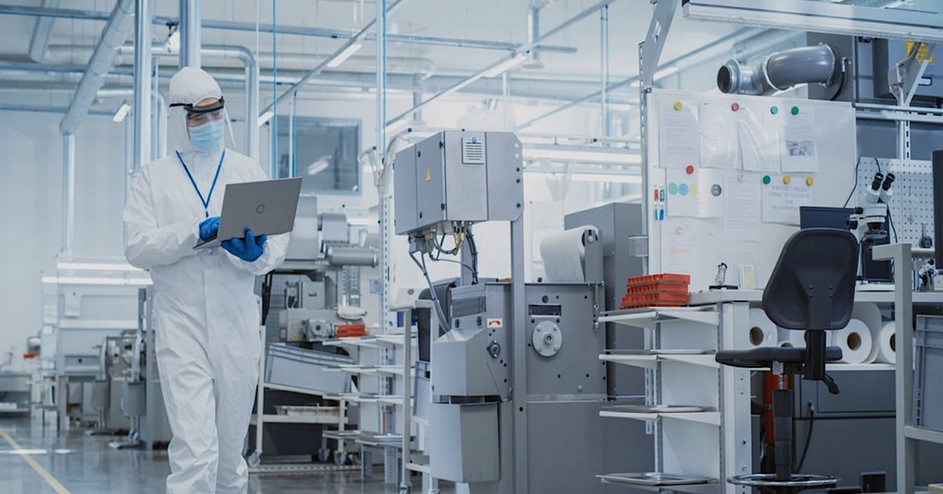
A clean room for medical devices is, at its most basic, a controlled environment. But that description understates what is actually involved. These are spaces engineered to exclude the invisible: airborne particles, microbial contamination, electrostatic discharge, and humidity fluctuations that would, in an ordinary factory, go unnoticed. In a cleanroom producing a cardiac catheter or an implantable joint component, those same variables can compromise sterility and contribute to patient harm. The infrastructure exists because the consequences of contamination in this industry are not abstract. They are clinical.
Why Contamination Control Matters
The human body is a highly sensitive detection system for foreign material. Introduce a contaminated device into a surgical site, and the immune response can range from localised inflammation to systemic infection. These are documented failure modes with an extensive history in the medical device literature, and they are why clean room for medical devices is a regulatory requirement rather than an optional enhancement.
Regulatory bodies including the FDA, the European Medicines Agency, and Singapore’s Health Sciences Authority do not treat cleanroom classification as a suggestion. For device categories where contamination risk is material, controlled environment production is a mandatory element of a compliant quality management system.
Cleanroom Classification: ISO 14644
The standard governing medical device cleanroom classification is ISO 14644-1, which establishes a numerical system based on airborne particulate concentration. Classes run from ISO Class 1, the most stringent, to ISO Class 9, which approximates ordinary room air.
The classes most commonly encountered in cleanroom production for medical devices are:
ISO Class 5
- No more than 3,520 particles of 0.5 microns or larger per cubic metre. Required for sterile-fill drug-device combination products and open sterile assemblies
ISO Class 6
- Used for intermediate-risk assembly operations and as a buffer zone adjacent to higher-classification areas
ISO Class 7
- The most widely used classification in medical device cleanroom manufacturing, appropriate for non-sterile device assembly and packaging operations where indirect contamination risk must be controlled
ISO Class 8
- Applied to less sensitive stages including component preparation, kitting, and secondary packaging
The older US Federal Standard 209E, still referenced in some legacy documentation, uses different nomenclature. Class 10,000 corresponds broadly to ISO Class 7, and Class 100,000 to ISO Class 8.
Design, Infrastructure, and Operational Controls
Classification is an outcome, not a given. It is achieved through a combination of facility design, mechanical systems, and operational disciplines that must all function together.
The critical elements include:
HVAC and filtration
- HEPA filters rated at 99.97 per cent efficiency for particles of 0.3 microns, with positive pressure differentials maintained between the cleanroom and adjacent areas to prevent particle ingress
Air change rates
- ISO Class 7 environments typically require between 60 and 90 air changes per hour; higher classifications demand significantly more
Surface materials
- Walls, floors, and ceilings built from non-particle-shedding, easily cleanable materials, with coved corners that eliminate horizontal ledges where contamination collects
Gowning protocols
- Personnel entering the medical device clean room are the most significant source of biological and particulate contamination. Coveralls, gloves, masks, and shoe covers are matched to the classification of each zone
Environmental monitoring
- Continuous or periodic measurement of airborne particulate counts, viable microbial contamination, temperature, humidity, and differential pressure, with defined alert and action limits
Singapore has invested substantially in cleanroom infrastructure for medical device production, with ISO-classified facilities supporting both local manufacturers and multinational developers using the country as a regional production base. Its workforce trained in cleanroom operations and environmental monitoring is regarded as among the most capable in Southeast Asia.
Validation, Monitoring, and Ongoing Compliance
A cleanroom is not qualified once and assumed to remain compliant indefinitely. ISO 14644-2 establishes the framework for ongoing monitoring and periodic re-qualification. Particle counts must be measured at defined intervals. Filter integrity must be tested. Pressure differentials must be logged continuously.
When monitoring data trends toward an alert limit, investigation is required before the limit is breached. When an action limit is exceeded, production must be evaluated for potential impact and the root cause identified and corrected. These requirements are how a manufacturer maintains ongoing confidence that its controlled environment performs as classified.
Personnel qualification is equally continuous. Gowning technique must be assessed, microbial monitoring results attributed to individuals, and training records kept current. In a regulated medical device cleanroom, the human element is never assumed to be under control. It is verified, repeatedly, through data. That discipline, applied consistently across every shift and every production run, is what separates a facility that holds its classification from one that merely achieved it at initial qualification.
The Environment as a Quality System Element
The cleanroom is not merely a room. It is a quality system element, as carefully managed as any piece of production equipment or documented procedure. The classification it achieves reflects design decisions, mechanical investment, operational discipline, and continuous monitoring sustained over the facility’s working life. For manufacturers who understand this, controlled environment production becomes a genuine competitive advantage: demonstrable, auditable, and central to the trust that regulators and customers place in the finished product. That trust begins with the clean room for medical devices.